
Flowers for Bereavement: Cultural Traditions, Symbolism, and the Language of Remembrance

Choosing Flowers for Bereavement With Care and Meaning
Flowers can bring comfort when words are hard to find. A thoughtfully chosen arrangement can express sympathy, honour someone’s memory and remind a grieving family that others are thinking of them.
When we prepare flowers for bereavement, we know there is no single arrangement that will feel right for every family. A white chrysanthemum may suit a formal wake, while roses in a familiar colour might mean much more to a family who associates them with their loved one.
Where the flowers are being sent matters too. A floral stand at a wake has a different purpose from a bouquet sent to someone’s home several weeks later. The first becomes part of the formal farewell. The second may simply say, “I still remember.”
For us, that distinction is important. Bereavement flowers can respect tradition without losing sight of the person at the heart of the tribute.
Key Takeaways:
- Flowers for bereavement should be chosen with the family, relationship and service setting in mind, rather than relying on symbolism alone.
- White and cream arrangements are often suitable when cultural or personal preferences are uncertain, while softer or deeper colours can add a more individual meaning.
- Lilies, chrysanthemums, roses, carnations and orchids can each convey different emotions, but personal associations may matter more than traditional interpretations.
- The most suitable arrangement depends on where it will be received. Standing displays often suit wakes, while bouquets can feel more personal for home delivery or later remembrance.
- Thoughtful details such as favourite blooms, meaningful colours, an appropriate card message and accurate delivery information can make a floral tribute feel more considered and personal.
The Deep Relationship Between Flowers, Culture and Remembrance
Flowers have long been part of the way people express grief, respect and remembrance. Their meaning, however, is never entirely universal. Culture, faith and family traditions all shape which flowers feel appropriate and how a tribute is understood.
Why Flowers Became Part of Mourning Traditions
Flowers have been part of mourning rituals for generations. Their natural cycle, from opening into full bloom to eventually fading, has made them closely associated with life, memory and the passing of time.
The customs surrounding them have developed differently between communities. In Singapore, wakes and funerals may follow religious, cultural and family practices that influence everything from the ceremony itself to the way condolences are offered.
Flowers remain present because they make care visible. At a wake, memorial or family home, an arrangement shows that someone has taken the time to acknowledge a loss. This simple function is part of why memorial flower traditions continue even as funeral practices change.
How Culture Changes the Meaning of Funeral Flowers
Funeral flower symbolism should always be understood within its cultural setting.
Singapore is particularly diverse in this respect. Even within one broad cultural community, customs are not necessarily uniform. National Heritage Board research into Chinese death beliefs in Singapore, for example, documents differences among Cantonese, Hokkien, Teochew, and other regional traditions rather than treating Chinese funeral practices as a single, fixed set of customs.
That is why we are careful about making blanket recommendations for funeral flowers across cultures.
When customers know that a family follows particular traditions, those preferences should come first. When they are unsure, we generally suggest keeping the arrangement restrained and asking the family or someone close to them if there is any doubt about what is appropriate.
Personal memories may also guide the choice. Someone known for tending orchids at home might be remembered through orchids, while pale pink roses could be especially meaningful if they were flowers the person regularly received or gave.
A colleague who does not know these personal details may prefer a simple funeral flower stand in softer tones. A close relative may feel comfortable choosing a flower with a much more personal connection.

Why Bereavement Flowers Still Matter After the Funeral
Much of the support surrounding a loss naturally gathers around the wake and funeral. Messages arrive, relatives visit, and practical arrangements take priority. In the weeks that follow, that activity may ease, even though grief remains very present.
This is where flowers for remembrance can take on a different role.
Not every remembrance arrangement needs to resemble formal funeral flowers. Bereavement flowers sent later can mark a birthday, an anniversary or another meaningful date, offering a simple reminder that the person who has passed is still remembered.
For example, a family may choose traditional white floral stands for a mother’s wake because they suit the setting. Months later, on her birthday, one sibling might send another a soft hydrangea bouquet because hydrangeas have always been her favourite.
The flowers mean something different now. They are no longer part of the ceremony. They belong to a shared memory.
This later form of remembrance can be especially meaningful because support after a loss does not need to end when the funeral does.

Understanding the Symbolism Behind Flowers for Bereavement
Every flower, colour and arrangement can express something different. When we prepare bereavement flowers, we look beyond traditional meanings alone and consider the memories, relationships and emotions connected to the person being remembered. This helps each tribute feel more personal, appropriate and sincere.
How Individual Flowers Express Remembrance, Respect and Love
Every flower can carry its own associations. Traditional sympathy flower meanings provide a useful starting point, but the differences among individual blooms can also help you decide on the tone you want the bereavement flowers to convey.
Lilies
Lilies are among the flowers most commonly used in condolence arrangements. Their open petals and graceful form give them a composed presence, especially in white and cream palettes.
We often pair lilies with chrysanthemums and softer supporting blooms to create arrangements that feel balanced rather than overly ornate.
A bouquet of lilies can also suit a more personal gesture. If a close friend has returned home after several days at a family wake, for example, pale lilies can acknowledge the loss without recreating the scale or formality of the funeral flowers.
Chrysanthemums
Chrysanthemums have longstanding associations with mourning and remembrance in many settings. Their layered petals also make them particularly useful in larger standing arrangements, where they add fullness without requiring a very elaborate palette.
At a formal wake, we may combine white chrysanthemums with lilies, carnations and foliage to give the bereavement flowers depth while keeping the overall appearance composed.
They are also a familiar option when the sender does not know the deceased’s favourite flowers and prefers a more traditional tribute.
Roses
Roses can bring a more personal quality to remembrance flowers.
White roses are often associated with sincerity and reverence, while pale pink roses can express gratitude and affection. Deeper reds have a much stronger emotional character and may be chosen where there is a close personal relationship.
The most meaningful use of roses, however, may have little to do with a conventional definition.
If someone received pink roses from their spouse every birthday, including those roses in a memorial arrangement preserves part of a ritual the family already recognises. The flower carries a memory rather than simply a symbolic label.
Carnations
Carnations bring soft, ruffled texture to sympathy arrangements and sit naturally alongside chrysanthemums, roses and foliage.
We use them when an arrangement needs fullness without feeling visually heavy. Their layered petals can soften the overall composition while maintaining the restrained character expected of many condolence arrangements.
A carnation bouquet can also work well after the funeral when the intention is to send a smaller gesture directly to someone at home.
Orchids
Orchids have a very different presence from traditional full-bodied condolence arrangements. Their sculptural stems and airy form can make a tribute feel more individual.
They may be particularly meaningful when the person being remembered grew orchids or kept them at home. In such cases, choosing orchid flowers allows the arrangement to recall something familiar about their everyday life.
That personal association often gives the bereavement flowers more meaning than any standard definition could.
How Colour Changes the Emotional Tone of Bereavement Flowers
Colour can shape the first impression of an arrangement before the individual flowers are even noticed.
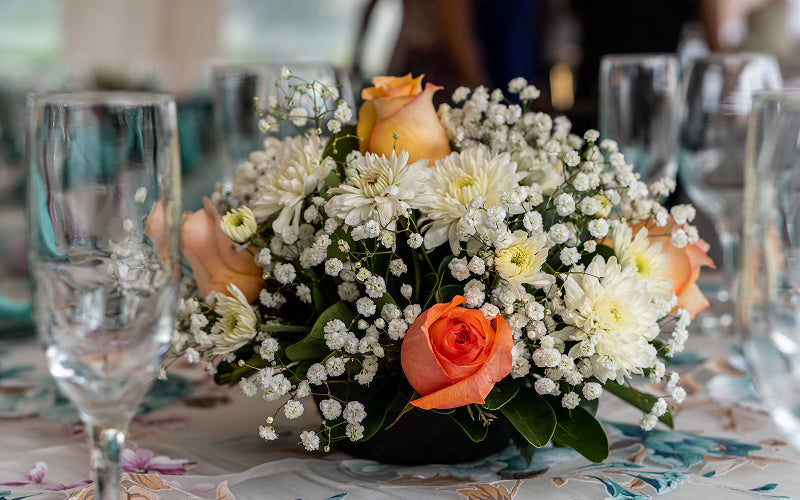
White and cream are among the palettes we use most readily when the sender does not know the family’s preferences. They provide a restrained foundation for bereavement flowers and pair naturally with lilies, chrysanthemums, carnations, roses, and foliage.
For a company sending condolence flowers after an employee loses a parent, a pale arrangement can keep the gesture formal and understated.
Pastel tones bring a different feeling. Blush pink, lavender, peach and soft cream can introduce more warmth, particularly when the arrangement is meant to remember the personality of the person who has passed.
A grandmother who filled her home with lavender flowers, for example, may feel more present in a pale purple tribute than in an arrangement chosen simply because white is traditional.
Burgundy, a deeper purple-red, creates a stronger visual impression. We generally use them when there is a clear reason, such as a favourite colour or a close relationship.
Foliage changes the composition too. Ferns, eucalyptus and other greenery can create breathing room between fuller blooms and give the arrangement a softer, more natural outline.
The aim is not to make every colour carry a fixed message. It is to use colour to create the right emotional tone for the tribute.

Choosing the Right Bereavement Flowers for the Person and the Setting
Once the bereavement flowers and colours have been considered, the remaining decision is largely practical: what form should the tribute take?
For Colleagues and Corporate Groups
When a colleague loses a parent or loved one, a single arrangement sent on behalf of the team can often express collective sympathy more clearly than several separate tributes.
Funeral wreaths or standing arrangements can suit this purpose because they arrive ready to display at the wake. A short condolence card can identify the company or department and carry a sincere message from the group.
There is rarely a need to make the flowers highly personal when the sender did not know the deceased closely. A composed arrangement and thoughtful message are often enough.
For Close Friends
Friends usually have more knowledge of the person and family, which creates room for a different kind of gesture.
A friend who cannot attend the wake may send bereavement flowers directly to the service. Another may decide not to add another formal stand and instead wait until the following week to send a smaller bouquet in the deceased’s favourite colours.
Neither timing is more correct. They simply offer different forms of support: one acknowledges the formal farewell, while the other acknowledges what comes afterwards.
For Immediate Family
Family tributes can draw more directly on the life of the person being remembered.
A favourite flower, a colour used at family celebrations or blooms from a garden they cared for can all become part of the arrangement. The bereavement flowers do not need to communicate the entire story of a life. Sometimes one recognisable detail is enough.
We can then balance that personal element with the scale and style required for the ceremony.
Consider Where the Flowers Will Be Displayed
A standing tribute is often practical for an HDB void deck wake, funeral parlour, church, or other service venue because it arrives ready to display.
A bouquet usually makes more sense for a home visit or a private gesture after the funeral.
For arrangements going directly to a wake, accurate delivery information is particularly important. Providing the deceased’s name, venue, block or hall details where relevant and the correct service dates helps us organise the flower delivery without creating another task for the family.
The choice between a stand and a bouquet is therefore less about etiquette than about where the flowers need to go and how they will be received.

Questions You Might Have
1. What are the most appropriate flowers for bereavement?
Lilies, chrysanthemums, roses and carnations are familiar choices, particularly in white, cream and softer tones.
If you knew the person well, however, their favourite flower can be equally appropriate. A familiar bloom or colour may carry a memory that a more conventional bereavement flower arrangement cannot.
2. Do funeral flower meanings differ between cultures?
Avoid making assumptions based only on broad cultural labels. Funeral practices can differ between religions, communities and individual families.
If possible, ask someone close to the family. Otherwise, you can speak with our florist team about the service and what you know about the family so we can help you choose a restrained option.
3. Is it acceptable to choose someone’s favourite flowers?
Yes. Favourite flowers can make a memorial tribute especially personal.
Someone who grew orchids, loved roses or regularly kept hydrangeas at home may be remembered through those blooms even if they are not the most conventional funeral choice. For a formal service, we can combine a favourite flower with a more restrained overall palette.
4. Should I send a flower stand or a bouquet?
A flower stand is usually more practical for a wake because it arrives ready for display and suits the scale of the venue.
A bouquet tends to feel more personal and can be better suited to a home visit, private expression of sympathy or flowers sent after the funeral.
5. Can sympathy flowers be sent after the funeral?
Yes. Flowers can still be meaningful weeks or months after a funeral.
A bouquet sent on a birthday, anniversary or another significant date can acknowledge that the person is still remembered. These later arrangements can also be more personal, using flowers or colours connected to shared memories.
6. What should I write on bereavement flowers?
A short, sincere message is usually enough.
“With deepest sympathy” or “Thinking of you and your family” can work when you did not know the deceased closely. If you shared a personal connection, a brief memory such as “We will always remember her warmth and kindness” can make the message feel more personal.
Choosing Flowers That Carry the Right Memory
Flowers cannot remove grief, but they can carry a message when finding the right words feels difficult.
At D’Spring Flowers, we prepare sympathy bereavement flowers and memorial arrangements for different moments of remembrance, from formal floral stands for wakes to bouquets chosen because a particular bloom reminds someone of the person they miss.
If you are choosing flowers for a wake, sending support after a loss or remembering someone on a meaningful date, explore our bereavement and condolence arrangements. We offer same-day and scheduled delivery across Singapore for selected arrangements, helping you send your flowers with care when they matter most.